

Every time I see a "desktop 5-axis CNC" pop up, I instinctively reach for the fine print. Usually, it’s buried in the details: a standard 3-axis mill with a tilting bed, technically "5-axis" on paper, but functionally a headache that forces you to stop, unclamp, and realign your workpiece every time the geometry gets tricky. If you’ve ever tried milling organic shapes, complex jewelry, or aerospace-style brackets and spent hours fighting registration errors, you know the struggle. We've all been waiting for a machine that bridges the gap between hobbyist accessibility and shop-floor capability without eating up the entire garage.
That’s where the InfiMaker K1 steps in. After digging through the specs and comparing it to the usual suspects in the desktop CNC space, it’s becoming clear that this isn't just another iteration of a rebranded router. It’s a serious contender for makers ready to level up.
Real 5-Axis, No Asterisks
The biggest differentiator with the K1 is how it handles motion. Most machines in this price bracket reposition the workpiece between cuts—moving axes sequentially. The K1, however, is built for simultaneous 5-axis machining. All five axes move together mid-cut, allowing you to carve compound curves and undercuts in a single setup.
For anyone who machines anything beyond simple flat parts, this is a game-changer. You aren't wasting time manually re-fixturing or hoping your alignment held after the tenth rotation.
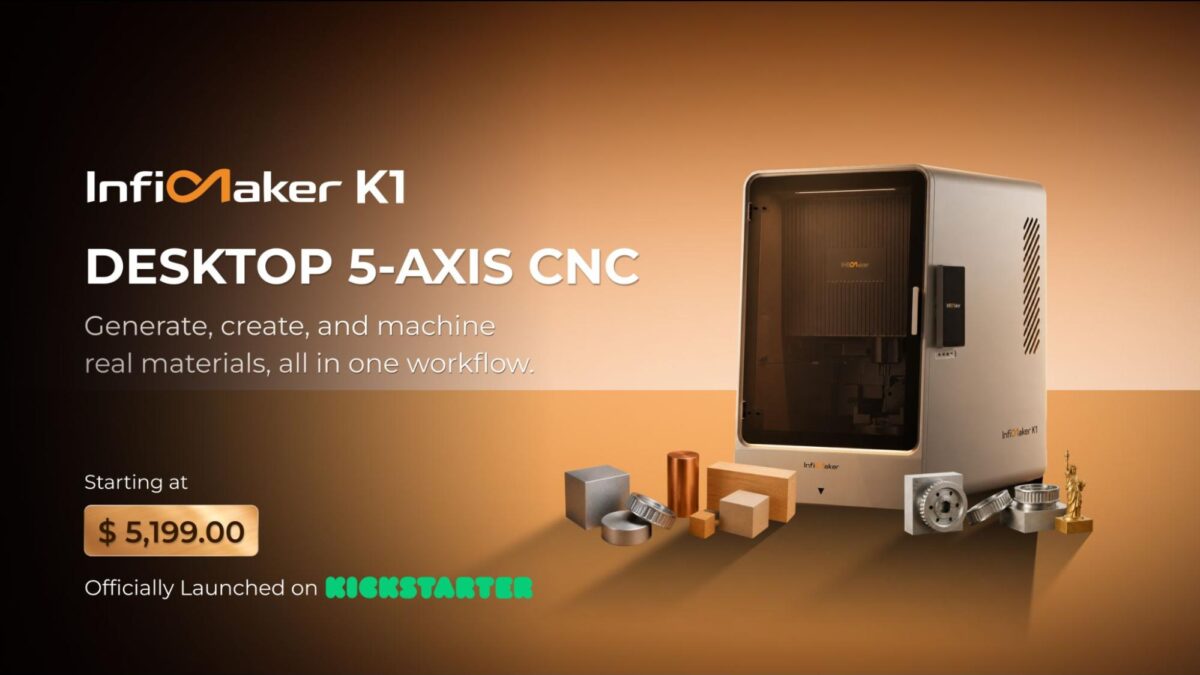
The mechanical layout backs this up. It features a vertical, spindle-centered design sitting on a one-piece cast bed, paired with a three-point gantry and preloaded ballscrews. InfiMaker claims a 72.8% increase in effective working volume compared to similarly sized machines, all without expanding the footprint. With a positioning accuracy of 0.01mm, the rigidity feels like something you’d expect on a factory floor, not a cluttered workbench.
AI That Actually Lowers the Barrier
When "AI" gets slapped onto a spec sheet, it’s usually marketing fluff. But InfiMaker’s approach here feels surprisingly practical. The machine runs on InfiStudio, a workflow that uses AI to simplify the jump from idea to finished part.
- Text-to-Part: You can input a text prompt or a reference photo, and the system generates a part, checking for manufacturability before you even touch a toolpath.
- Auto-Detection: A built-in camera scans your clamped stock and automatically adjusts feed rates, speeds, and depth based on the material.
- Tool Health Monitoring: It watches for tool wear in real-time, alerting you before a dull bit ruins your workpiece.
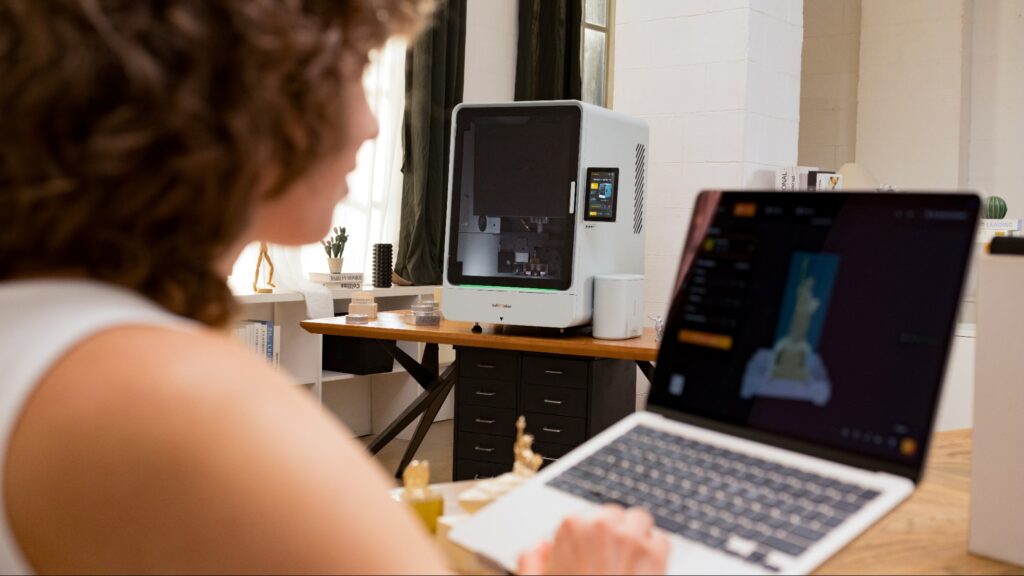
This doesn't replace professional CAM software like Fusion 360 or PowerMill—if you use them, the K1 takes standard G-code just fine. But for those who haven't mastered complex toolpathing yet, this system drastically lowers the learning curve.
Shop-Floor Specs in a Compact Package
The K1 isn't holding back on power. It packs a 1.5kW spindle spinning up to 20,000 RPM and features a 6-slot automatic tool changer (ATC) with an integrated ruby probe for centering and calibration. No more manually swapping bits or guessing your zero point.
The machine is also equipped with InfiFlow, a high-pressure coolant system built specifically for materials that usually punish desktop machines with heat—think titanium and stainless steel.
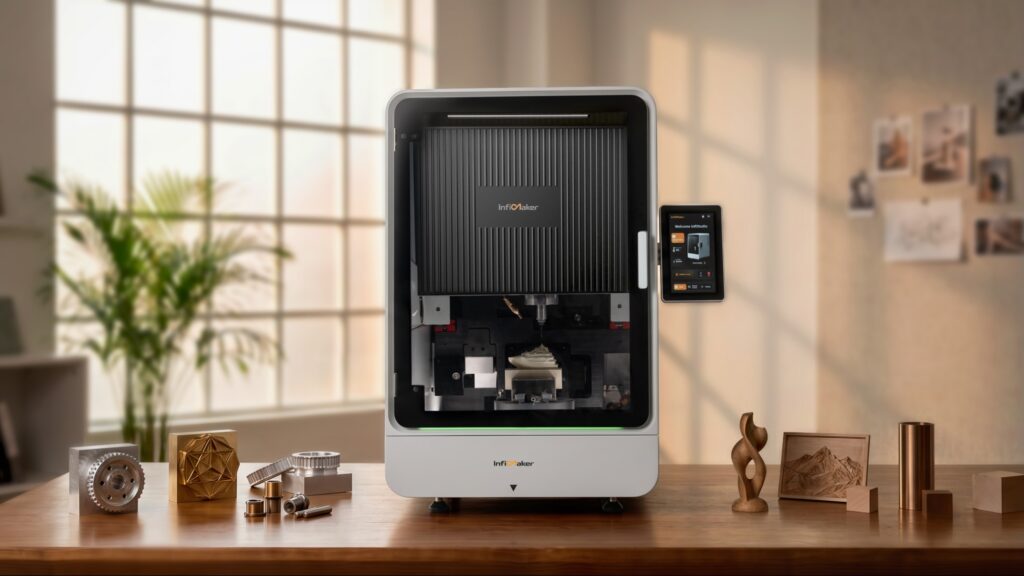
Key Specs at a Glance:
- Working Volume: 120 x 120 x 150mm (expandable in 3-axis mode).
- Materials: Titanium, steel, aluminum, brass, copper, wood, acrylic, wax, and engineering composites.
- Noise: Under 70dB in tested conditions.
- Safety: Electronic door locks during cutting and only releases when safe.
Is This the Right Upgrade for You?
Let’s be honest: this isn’t a first-time toy. If you’re deciding between a cheap router and your first hobby mill, this might be overkill. But if you’re a maker, a small shop owner, or an educator who has outgrown 3-axis limitations and doesn’t have the floor space or budget for an industrial cell, the K1 hits a sweet spot.
Currently on Kickstarter with early bird pricing, the InfiMaker K1 delivers on the promise of what a desktop 5-axis machine should be. It combines the precision of a pro shop with the accessibility of modern AI, all in a box that fits right on your desk. If you're ready to stop re-clamping and start machining the complex parts you've been dreaming of, this is the machine that finally makes it possible.