

You walk into your living room hoping your smart home will simply work. Instead, you’re greeted by a dozen disconnected apps, conflicting voice commands, and glossy promises about “AI companions” that still don’t exist. At IFA 2026, both LG and Samsung repeated the exact same pitch: “Your home, your companion.” But behind the stage demos lies a very practical question—what’s actually on the shelf today, and which system truly respects your time, budget, and data?
The Reality Behind the Smart Home Hype
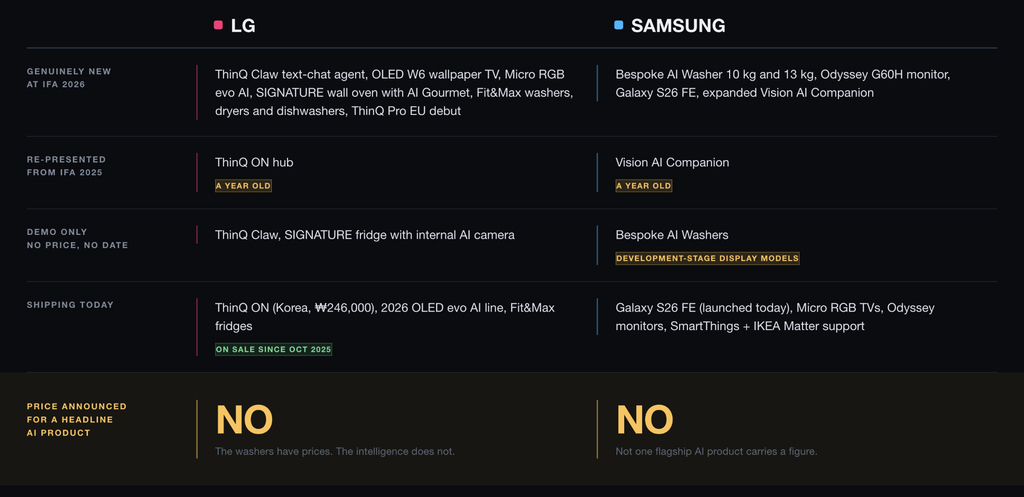
Before investing in an entire ecosystem, it’s crucial to separate press-kit demonstrations from shipping products. LG’s ThinQ Claw and Samsung’s next-gen Bespoke AI appliances are largely in development or shown as functional prototypes. The real conversation isn’t about humanoid robots folding laundry; it’s about which hub you can actually plug into your wall this week, and which one won’t lock you into a closed loop.
LG’s Open-Source Gamble: Power With Unanswered Questions
LG is taking a remarkably open route. By building its AI agent on OpenClaw and acquiring Athom (the creators of Homey), LG is offering deep local automation and true cross-brand compatibility. In theory, you could sync Philips Hue lights, Zigbee sensors, and LG appliances into a single, locally processed routine. That’s a massive win for tech enthusiasts who value control and low-latency responses.
But openness comes with real-world trade-offs. Data retention, multi-user access, and plugin security remain loosely defined. If you enjoy tweaking Home Assistant dashboards or running local servers, this ecosystem will feel like a playground. If you just want your thermostat to adjust when you leave for work, the learning curve might sting.
Samsung’s Quiet Strength: Infrastructure You Already Own
Samsung isn’t chasing flashy AI headlines. Instead, it’s playing the long game with SmartThings. If you bought a Samsung TV after 2022, you already own a Thread border router hiding in plain sight. Samsung’s strategy is simple: act as the interface layer, seamlessly integrating Gemini, Perplexity, and Microsoft Copilot into your existing hardware.
The advantage? You don’t need a complete overhaul. Drop in a $6 IKEA Matter-over-Thread bulb or a simple water leak sensor, pair it through SmartThings, and suddenly your home starts reacting intelligently. It’s not revolutionary, but it’s reliable, widely supported, and ready for everyday use.
What Actually Matters When You’re Shopping?
The “best” smart home hub in 2026 isn’t decided by corporate press releases. It’s decided by your living space, technical comfort, and privacy boundaries:
- For plug-and-play simplicity: Samsung’s existing SmartThings infrastructure works immediately. Start with motion sensors, smart locks, or affordable Matter devices to test daily automations before upgrading to high-ticket appliances.
- For deep customization: LG’s ThinQ API + Home Assistant route offers granular control and local processing. Remember: buy LG for appliance reliability, not for ThinQ Claw’s unproven AI agent.
- For privacy peace of mind: Both companies still leave critical questions open. Where does voice context go? How long are fridge camera images stored? What survives a factory reset? Until transparent retention policies are published, adjust your “always-on” settings carefully.
The Verdict: Buy What’s Real, Not What’s Promised
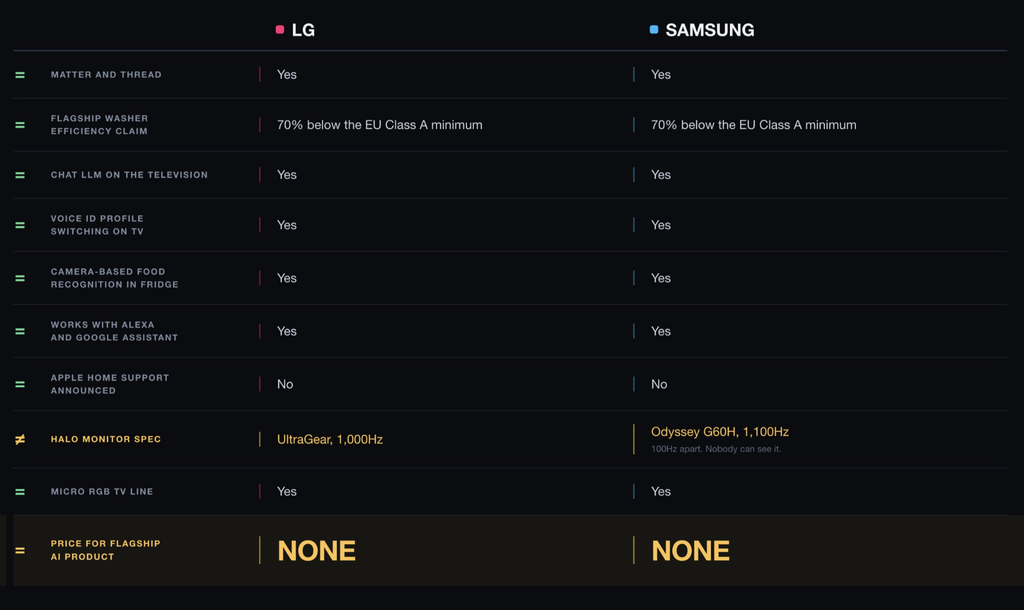
The 2026 smart home market is shaped by available products, not marketing rivalries. Samsung wins on immediate accessibility; LG wins on future flexibility. Neither has fully cracked the long-term data stewardship puzzle, and both are quietly shifting focus toward commercial building management systems.
If you’re a hands-on user who values control, start small with Samsung’s existing infrastructure or LG’s open API tools. If you simply want reliable, everyday automation, stick to what’s currently in stock and skip the prototype promises.
Your home deserves intelligence that works quietly in the background—not another dashboard to manage. Pick the ecosystem that ships today, respects your boundaries tomorrow, and lets you live instead of tinker. Ready to upgrade your space? Start with one sensor, one routine, and watch your home quietly come alive.